

Fisher
214C
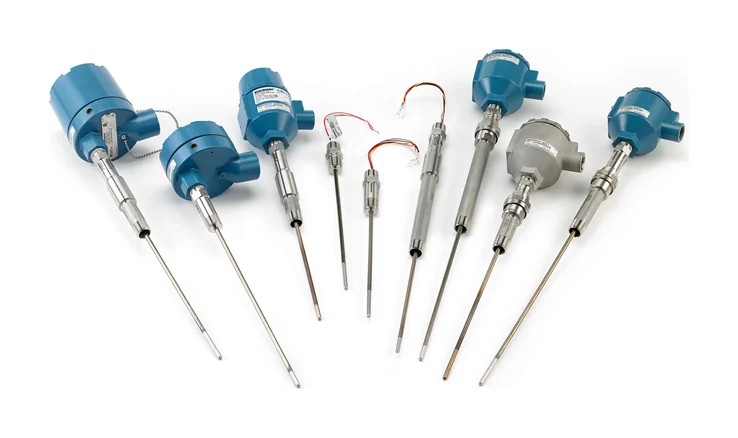
Rosemount 214C temperature sensor
The current line: Pt-100 RTDs and type J, K and T thermocouples, single or dual; pairs with the 114C thermowell.

Temperature · Rosemount
Where the measurement begins: the sensor defines the accuracy, range and response of the whole temperature point.
The sensor, also called a probe, is where temperature measurement begins. Process plants use two non-interchangeable technologies, the RTD and the thermocouple, which differ in signal, instrumentation, accuracy and range.
An RTD uses a resistive metal, almost always platinum for its accuracy and repeatability, whose resistance increases with temperature. A thermocouple measures the voltage at the junction of two different metals and withstands much higher temperatures and harsher environments.
Models
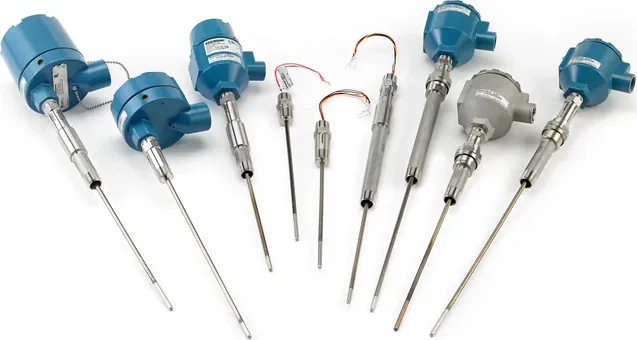
Manufacturer reference models for this type. Tell us the exact model or attach the nameplate: scope and availability are confirmed with each quotation.
Fisher
214C
The current line: Pt-100 RTDs and type J, K and T thermocouples, single or dual; pairs with the 114C thermowell.
Fisher
68
Single-element Pt-100 RTD. Series declared obsolete by the manufacturer: its current replacement is quoted.
Fisher
78
Single- or dual-element Pt-100 RTD. Series declared obsolete by the manufacturer.
Fisher
183
Type J, K, E or T thermocouple, single or dual. Series declared obsolete by the manufacturer.
Fisher
185
Type J, K or N thermocouple with a DIN-style head. Series declared obsolete by the manufacturer.
Brand reference models per the manufacturer’s catalog. ITS quotes new valves and genuine parts to order; it does not publish stock or prices.
How it works
According to the manufacturer, the RTD offers higher accuracy, especially at lower temperatures, up to about 600 °C, and its response time depends on sensor size and construction. The thermocouple withstands temperatures up to 1800 °C depending on type, tolerates vibration better and responds fast.
The sensor is installed inside a thermowell or directly in the process, and connects to a transmitter that converts its low-level signal. Insertion length, sheath diameter, element type and head connection are defined in the model code.
The most used element in general process temperature for its accuracy and stability. The Pt100 is the reference.
A junction of two different metals. Types J, K and T cover most services; they are chosen by range and atmosphere.
The current line: thin-film or wire-wound Pt-100 RTDs and type J, K and T thermocouples, in single or dual element.
The manufacturer declares them obsolete, but they remain in the installed base. Emerson offers a converter to move earlier model codes to the 214C.
Applications
ITS de Venezuela
We quote new Rosemount RTD and thermocouple sensors, alone or as an assembly with thermowell and transmitter, including the current replacement for discontinued series; we install and commission them in the field, calibrate sensors and transmitters through our calibration service, in the field and in the laboratory, and integrate the measurement into the control loop. We reply with availability in Venezuela or Orlando. To quote, send the sensor type, temperature range, insertion length, diameter, connection, whether it is single or dual and the thermowell it will go into, or the model code of the current sensor.
Quote parts or repairPressure, temperature, flow and volume, in the field and in the laboratory.
On-site support, shutdowns, commissioning and start-up.
Loops, actuation, re-engineering and equipment upgrades.
Resources
The full category, the technical library and the manufacturer’s official documentation.
Category
Transmitters, RTD and thermocouple sensors, thermowells.
Technical library
Our own documents and official Fisher links for each family.
Manufacturer
Product pages, bulletins and manuals on emerson.com.
It depends on the application. The RTD usually gives higher accuracy, especially at lower temperatures, up to about 600 °C. The thermocouple withstands much higher temperatures, up to 1800 °C depending on type, tolerates vibration better and responds fast thanks to its simpler construction.
Not usually. They differ in signal type, required instrumentation, accuracy and temperature range: the sensor is selected for the application.
Temperature
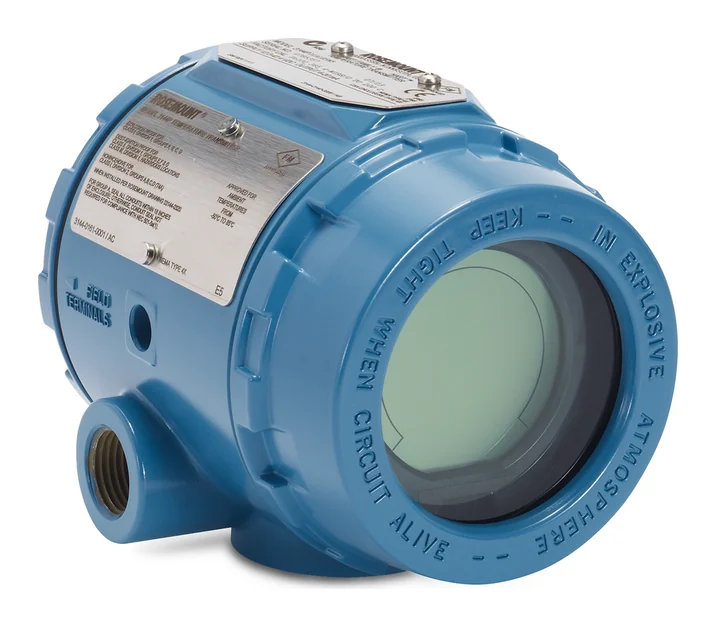
They convert RTD and thermocouple signals into 4-20 mA, HART, fieldbus or wireless, and watch over sensor health.
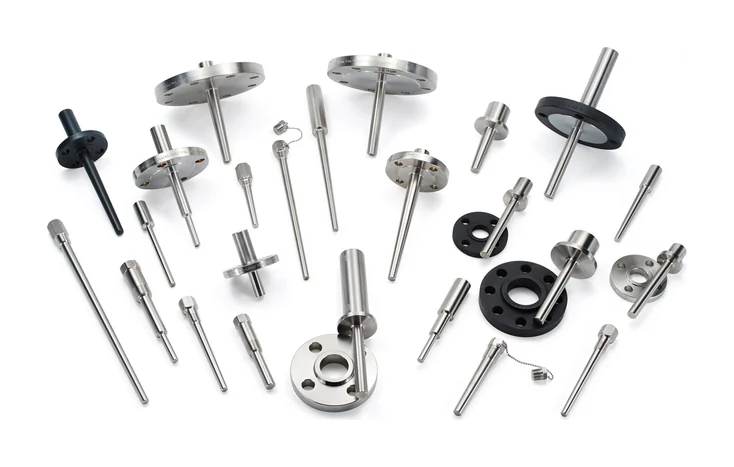
The well that protects the sensor from the process and lets it be removed without stopping the line, calculated against vibration.
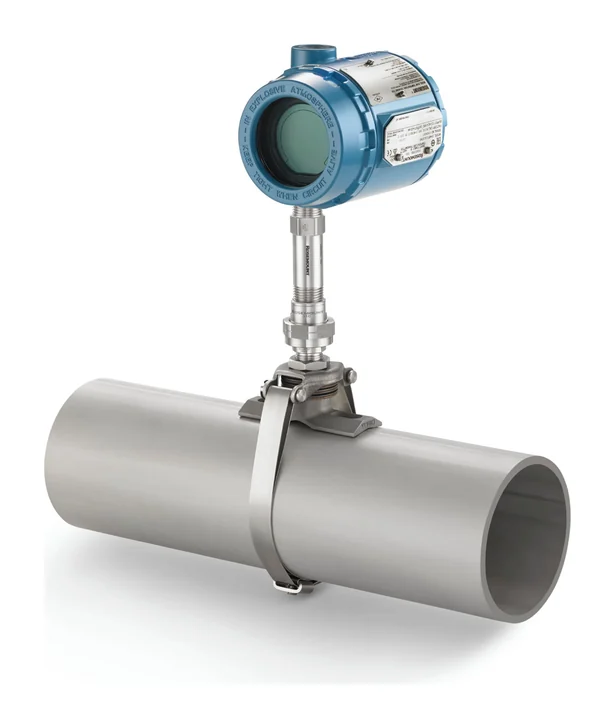
Process temperature with no thermowell and no penetration, and wireless transmission for points without cable.
Send the model, the part number or the process data. We reply with availability, lead time and delivery terms.