

Fisher
G-Series
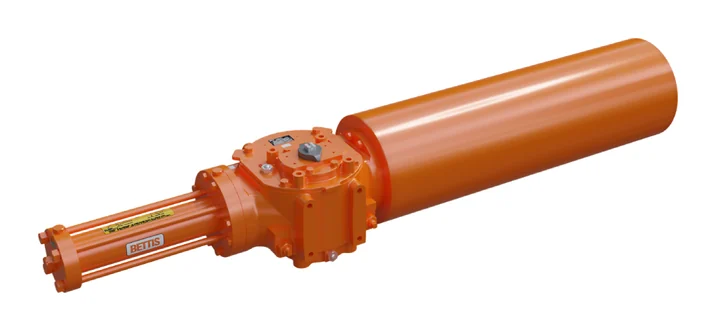
Bettis G-Series hydraulic valve actuator
Modular hydraulic scotch yoke for 90-degree mechanisms, suitable for SIL-required applications.
Actuators · Bettis
Hydraulic pressure instead of air: more force for large valves, gas pipelines and emergency shutdown.
A hydraulic actuator converts hydraulic energy into mechanical energy to move the valve and control the flow of gases or liquids. It delivers high torque and thrust, positions accurately and responds quickly to the control signal.
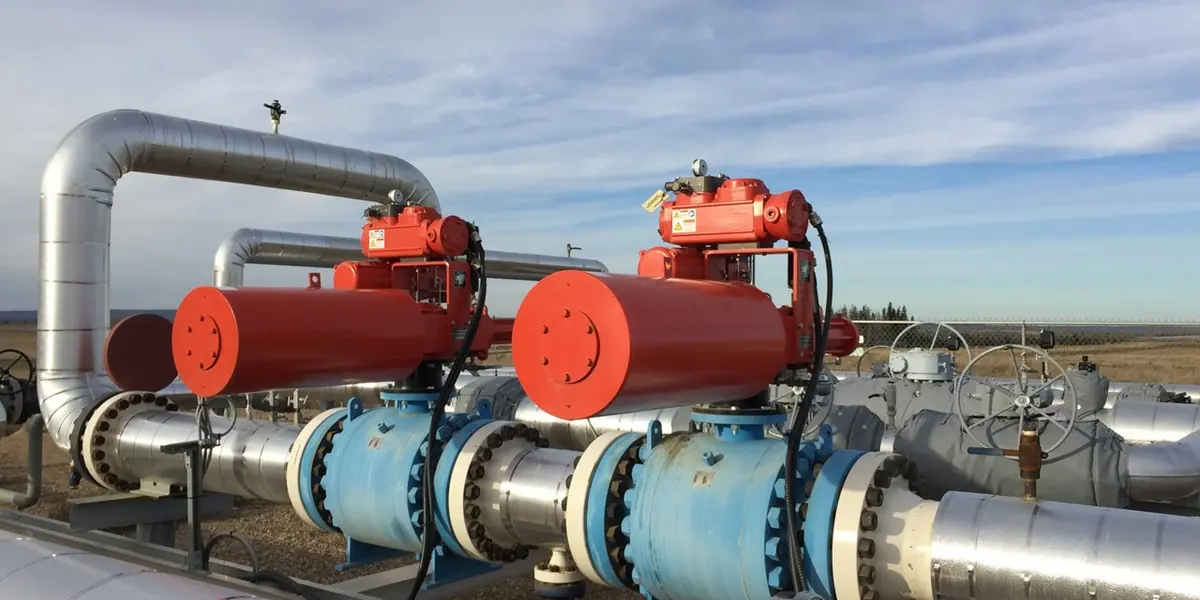
It is the answer for large or high-pressure valves and for emergency shutdown (ESD), and it is common on gas pipelines, where the gas itself provides the power. At Bettis it is covered by the hydraulic G-Series, the offshore GS-Series and the EHO electro-hydraulic operator.
Models
Manufacturer reference models for this type. Tell us the exact model or attach the nameplate: scope and availability are confirmed with each quotation.
Fisher
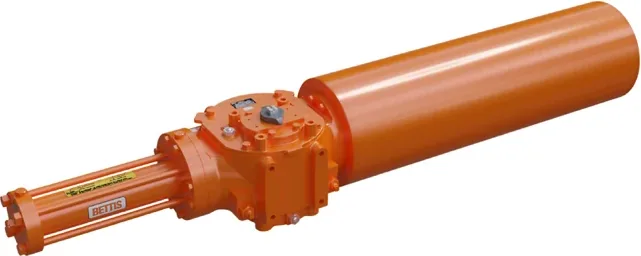
G-Series
Modular hydraulic scotch yoke for 90-degree mechanisms, suitable for SIL-required applications.
Fisher
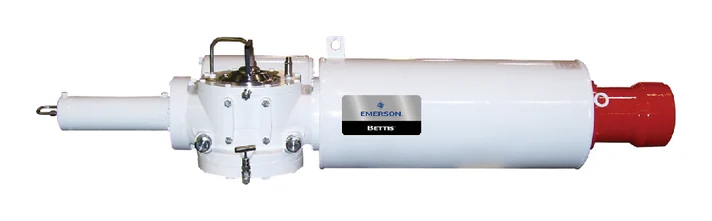
GS-Series
Hydraulic scotch yoke for splash zone, riser and other offshore fail-safe applications.
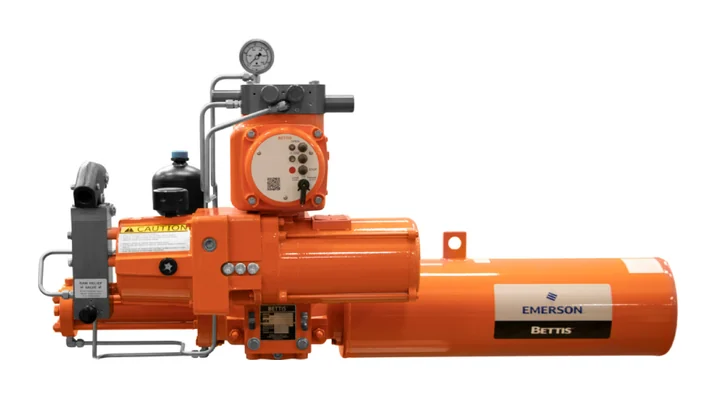
Fisher
EHO
Self-contained electro-hydraulic actuator for quarter-turn valves, with spring return and an integral power pack.
Brand reference models per the manufacturer’s catalog. ITS quotes new valves and genuine parts to order; it does not publish stock or prices.
How it works
On the hydraulic G-Series, fluid pressure pushes a piston coupled to a slotted yoke that converts linear motion into a 90-degree rotation. In spring-return designs, a spring module drives the valve to its safe position when pressure is released; in double-acting designs, fluid drives the piston in both directions.
The design shares the modular architecture of the pneumatic G-Series: interchangeable power and spring modules to reverse the failure mode, and the Tension-Lok device, which locks the spring module so it can be removed and installed safely. On the EHO, a spring-return actuator for the fail-safe stroke is combined with an integral hydraulic power pack and an electronic control module, so the assembly does not depend on an external hydraulic supply.
For ball, butterfly and plug valves, louvers, dampers and other 90-degree mechanisms; suitable for SIL-required applications.
Hydraulic scotch yoke for splash zone, riser and other fail-safe applications; it can be changed from single-acting to double-acting after installation.
Self-contained assembly for quarter-turn emergency shutdown valves, in Standard and Smart versions; the latter adds advanced diagnostics.
The spring drives the valve to the safe position when hydraulic pressure is released; double-acting uses fluid in both directions.
Applications
ITS de Venezuela
We quote Bettis hydraulic and electro-hydraulic actuators and their genuine parts (seal kits and spring and power modules) and support selection based on valve torque and required stroking time. In our Puerto Ordaz workshop and in the field we handle the overhaul, seal replacement, travel stop adjustment and stroke test of the assembly. Parts are managed through the Venezuela ↔ Orlando inventory. For a quotation, send the valve type and size, the required torque, the available hydraulic pressure or electrical supply, the stroking time, the failure action and the actuator nameplate if it is a replacement.
Quote parts or repairLoops, actuation, re-engineering and equipment upgrades.
On-site support, shutdowns, commissioning and start-up.
Valve condition assessment before deciding to repair or replace.
Resources
The full category, the technical library and the manufacturer’s official documentation.
Category
Pneumatic, electric and hydraulic valve automation.
Technical library
Our own documents and official Fisher links for each family.
Manufacturer
Product pages, bulletins and manuals on emerson.com.
Above all on gas transmission pipeline valves, where the pipeline gas itself provides a ready source of power, and on emergency shutdown valves that must act fast. Also on large, heavy or high-pressure valves.
High torque or thrust, accurate positioning and fast response, with robust designs and, in some cases, fail-safe mechanisms that return the valve to a predetermined position. In exchange, it needs a source of hydraulic pressure or an electro-hydraulic assembly; for small and medium valves with instrument air available, a pneumatic actuator is simpler.
Actuators
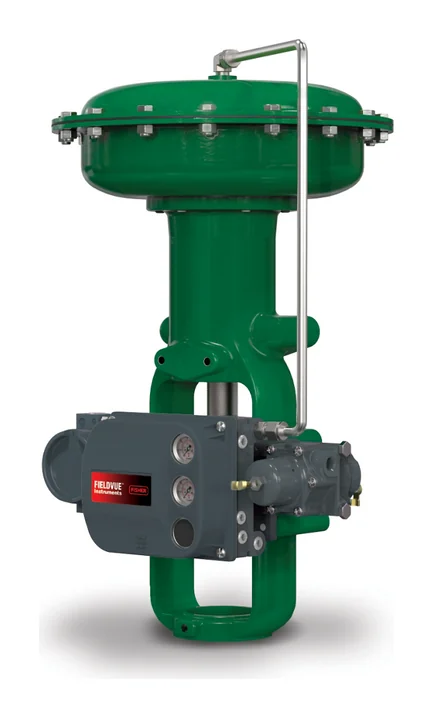
The most widely used actuator on control valves: air pushes a diaphragm against a spring and, if the air fails, the spring drives the valve to its safe position.
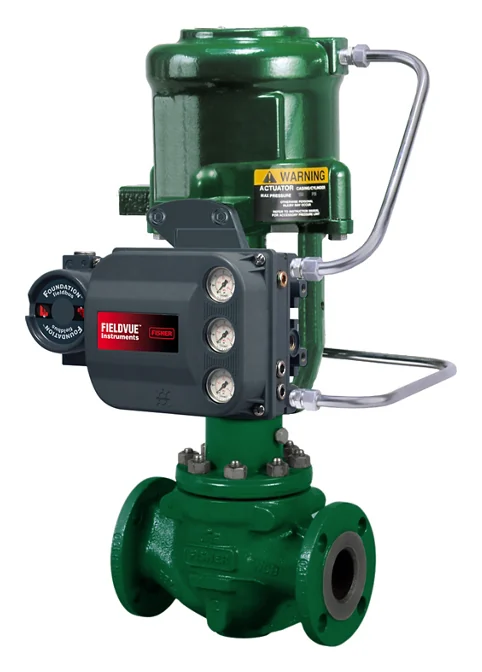
More thrust and stiffness than a diaphragm: air acts on a piston to move large valves or valves with high pressure drops.
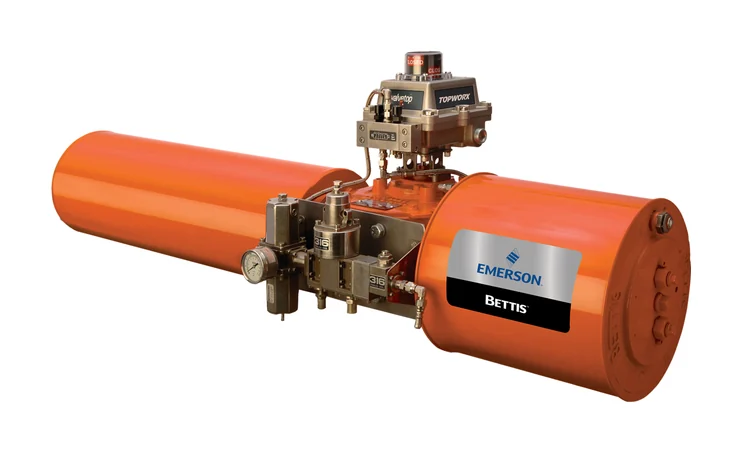
Quarter-turn with torque where the valve needs it: the yoke turns piston thrust into rotation for ball, butterfly and plug valves.
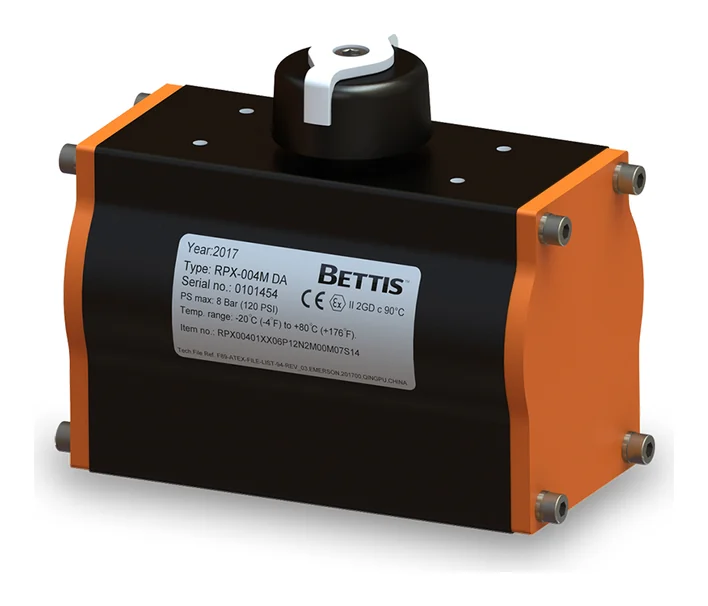
Compact and balanced: two piston racks turn a central pinion to automate ball, butterfly and plug valves.
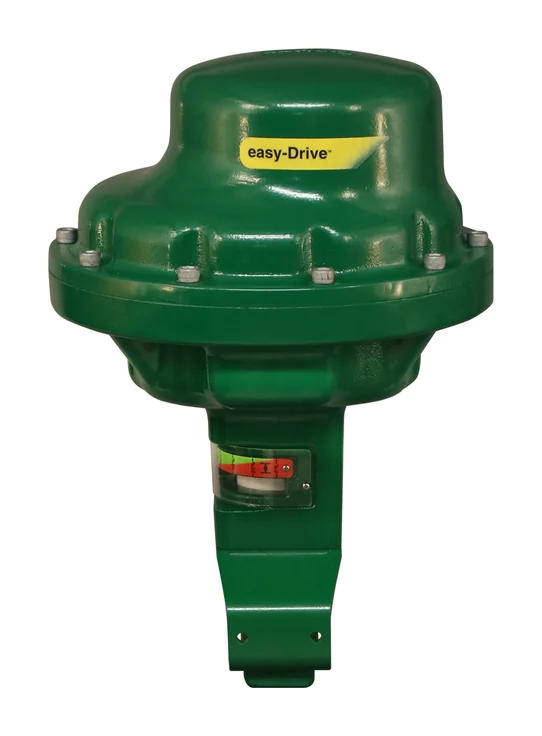
An electric motor instead of air: throttling or on/off control where there is no instrument air, with no gas vented to the atmosphere.
Send the model, the part number or the process data. We reply with availability, lead time and delivery terms.