

Fisher
585C
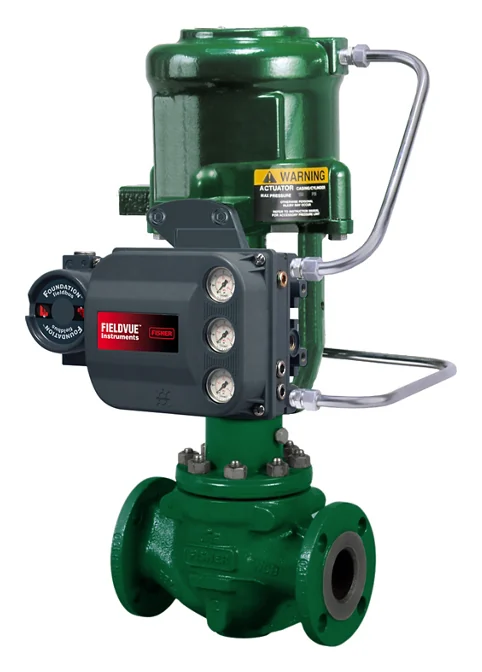
Fisher 585C piston actuator
Double-acting, with low-to-medium thrust for small and medium sliding-stem valves.
View bulletin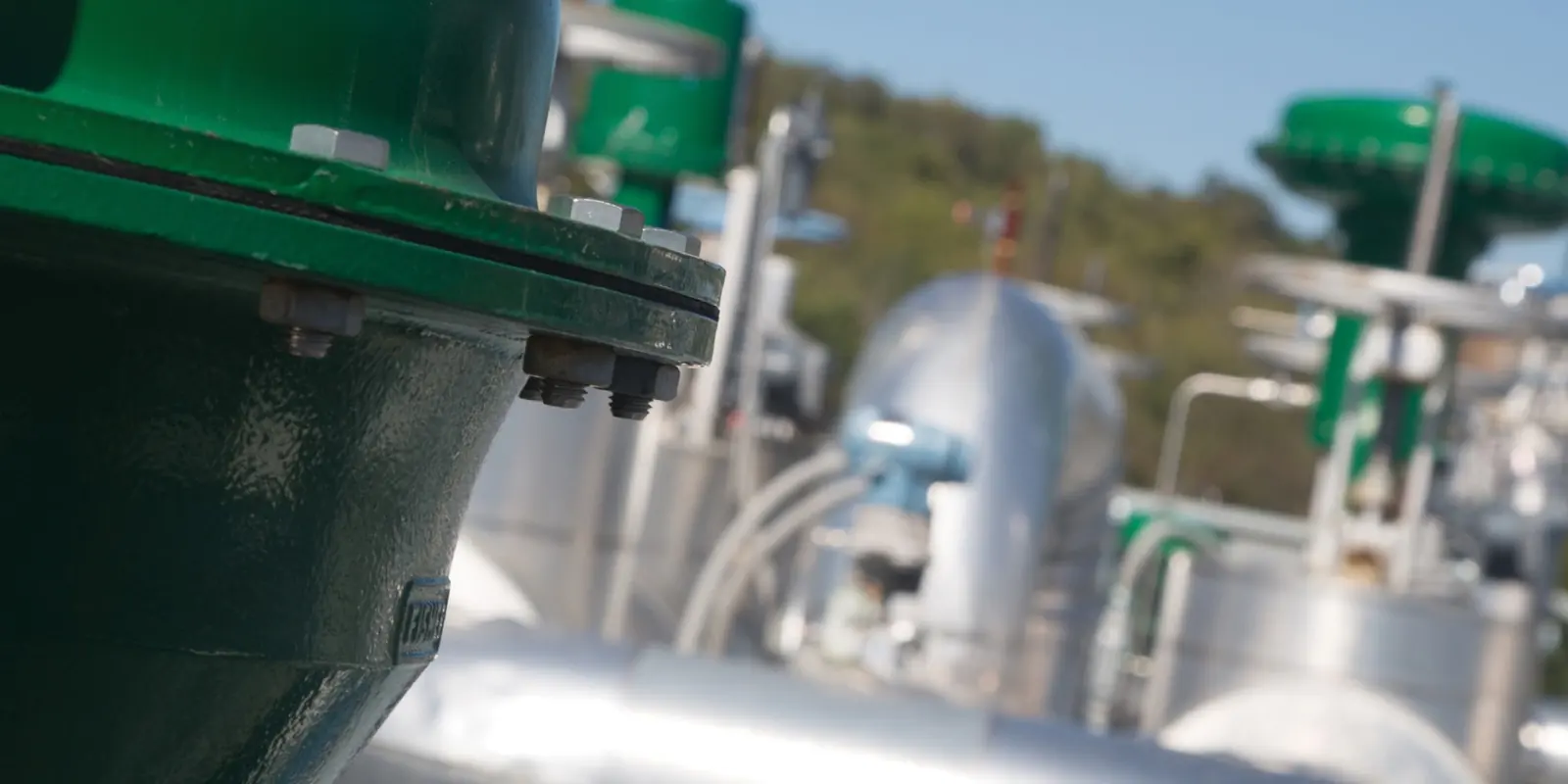
Actuators · Fisher
When the service calls for more force, more travel or more stiffness than a diaphragm delivers, the pneumatic piston provides it in a compact assembly.
A piston actuator uses air pressure on a piston that slides inside a cylinder. With air on both sides, it delivers more thrust and more stiffness against process forces than a diaphragm actuator of comparable size.
It is chosen for large control valves, high pressure drops and long travels. The position on loss of air is obtained with springs, on some constructions, or with trip valves. The Fisher 585C and 685 drive sliding-stem valves; the 1061, rotary valves.
Models
Manufacturer reference models for this type. Tell us the exact model or attach the nameplate: scope and availability are confirmed with each quotation.
Fisher
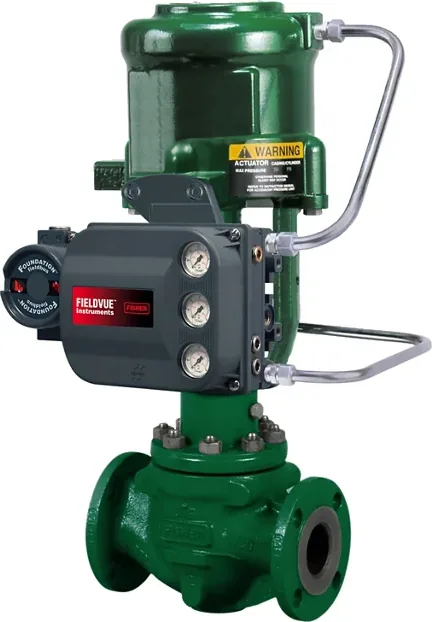
585C
Double-acting, with low-to-medium thrust for small and medium sliding-stem valves.
View bulletin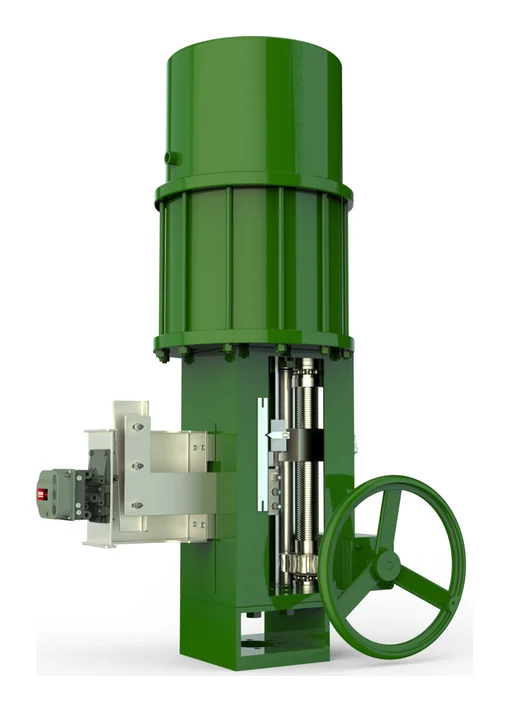
Fisher
685
Double-acting, with medium-to-high thrust for medium to very large sliding-stem valves.
View bulletin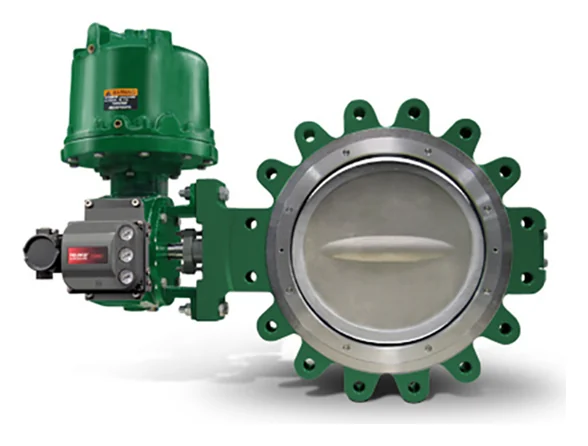
Fisher
1061
Rotary piston for splined-shaft valves: Vee-Ball, eccentric disc and butterfly.
View bulletinBrand reference models per the manufacturer’s catalog. ITS quotes new valves and genuine parts to order; it does not publish stock or prices.
How it works
In a double-acting piston, the positioner distributes air between the two cylinder chambers: it raises pressure in one and lowers it in the other until the stem reaches the requested position. Because air acts on both sides, the piston is held pneumatically and keeps its position better against the changing forces of the fluid.
In rotary piston actuators such as the 1061, the linear motion of the piston is transmitted to a lever that turns the splined valve shaft. Selection starts from the thrust or torque the valve requires at the worst service condition, the available supply pressure and the failure action.
Double-acting, with low-to-medium thrust for small and medium valves such as easy-e, HP and EH. The smaller sizes accept bias springs for a spring-return fail mode.
Double-acting, with medium-to-high thrust for medium to very large sliding-stem valves such as easy-e, HP, EH and FB. Spring-return constructions are also available.
Operates splined-shaft rotary valves: Vee-Ball segmented ball, eccentric disc and butterfly. Its single-point linkage with a splined, clamped lever minimizes lost motion.
Where there is no spring, a trip valve senses loss of supply and drives the valve to its safe position or holds it where it is.
Applications
ITS de Venezuela
We quote new piston actuators and genuine Fisher parts (piston seals, O-rings, stems and repair kits), overhaul the actuator in our Puerto Ordaz workshop with leak and stroke tests, and adjust the positioner and trip accessories in the field. Parts are managed through the Venezuela ↔ Orlando inventory. For a quotation, send the model and size from the nameplate, the serial number, the valve it drives, the supply pressure and the required failure action.
Quote parts or repairRepair to the manufacturer’s specification, with bench tests and report.
On-site support, shutdowns, commissioning and start-up.
Loops, actuation, re-engineering and equipment upgrades.
Resources
The full category, the technical library and the manufacturer’s official documentation.
Category
Pneumatic, electric and hydraulic valve automation.
Technical library
Our own documents and official Fisher links for each family.
Manufacturer
Product pages, bulletins and manuals on emerson.com.
When the thrust or torque the valve requires exceeds what a reasonably sized diaphragm delivers: large valves, high shutoff pressure drops or long travels. For most small and medium throttling services, the spring-and-diaphragm actuator remains the simplest option.
In two ways. Some constructions include springs: the smaller 585C sizes accept bias springs and the 685 is offered with spring return. On the rest, accessories are used: a trip valve senses supply pressure falling below a defined point and drives the valve to its safe position or holds it in its last position.
Actuators
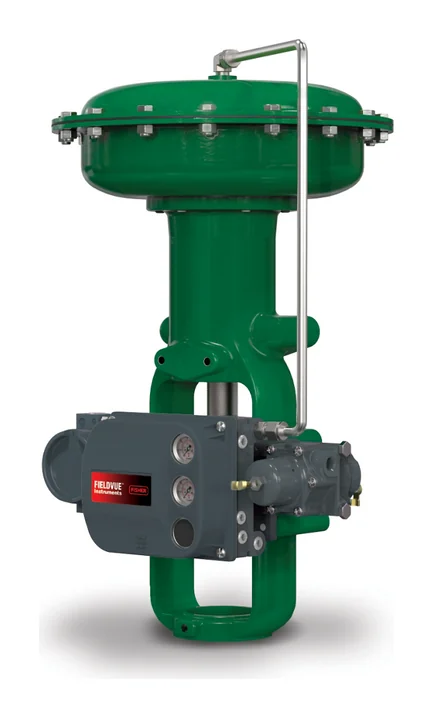
The most widely used actuator on control valves: air pushes a diaphragm against a spring and, if the air fails, the spring drives the valve to its safe position.
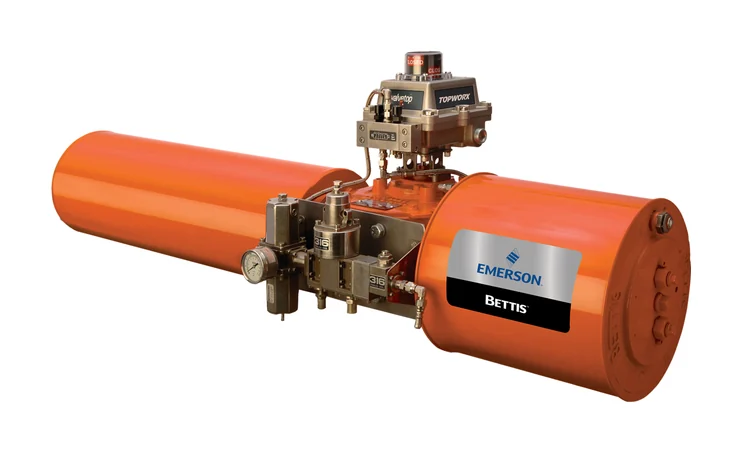
Quarter-turn with torque where the valve needs it: the yoke turns piston thrust into rotation for ball, butterfly and plug valves.
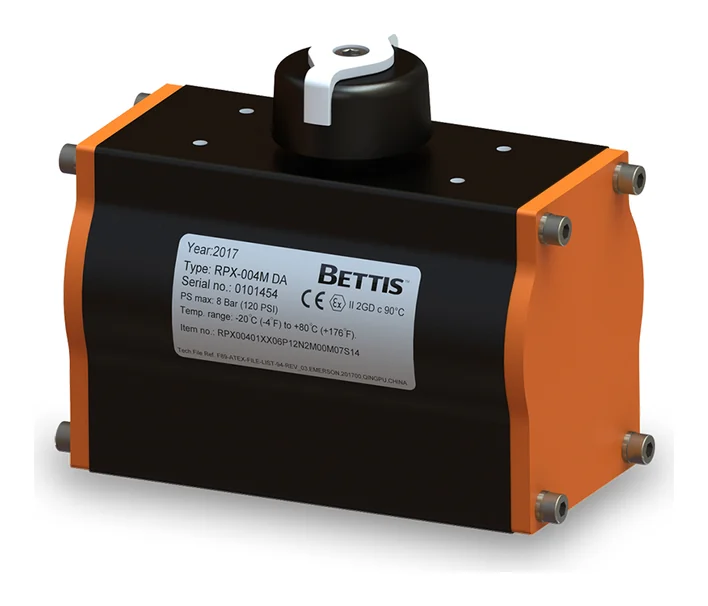
Compact and balanced: two piston racks turn a central pinion to automate ball, butterfly and plug valves.
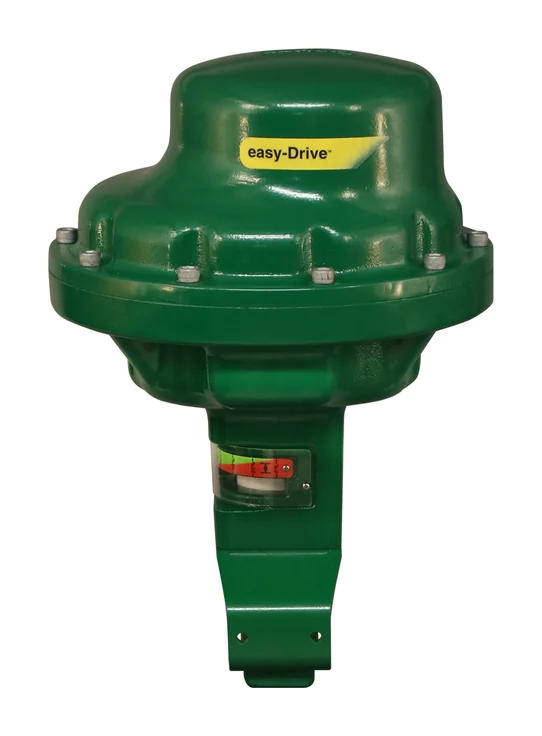
An electric motor instead of air: throttling or on/off control where there is no instrument air, with no gas vented to the atmosphere.
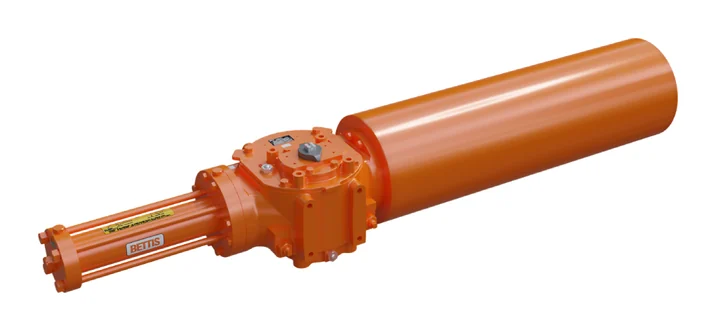
High torque and fast response for large, high-pressure and emergency shutdown valves.
Send the model, the part number or the process data. We reply with availability, lead time and delivery terms.