

Fisher
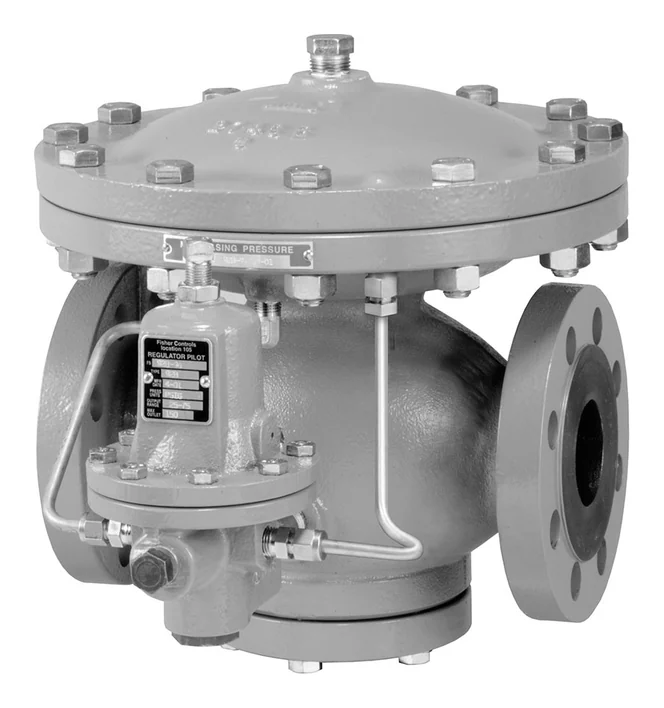
92B
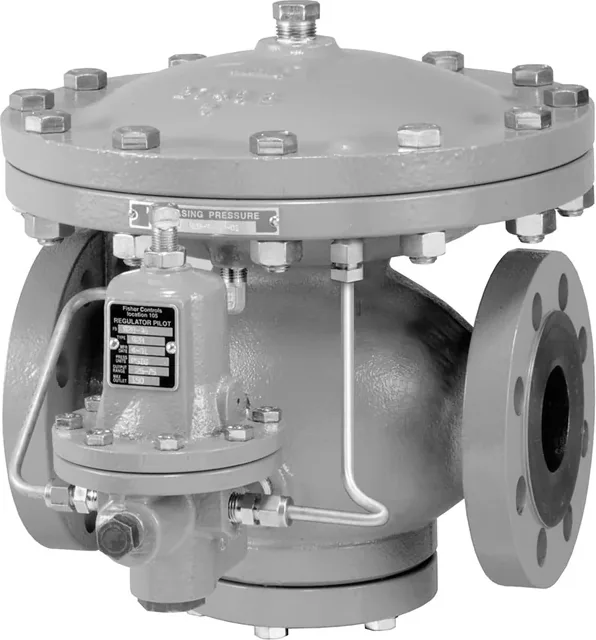
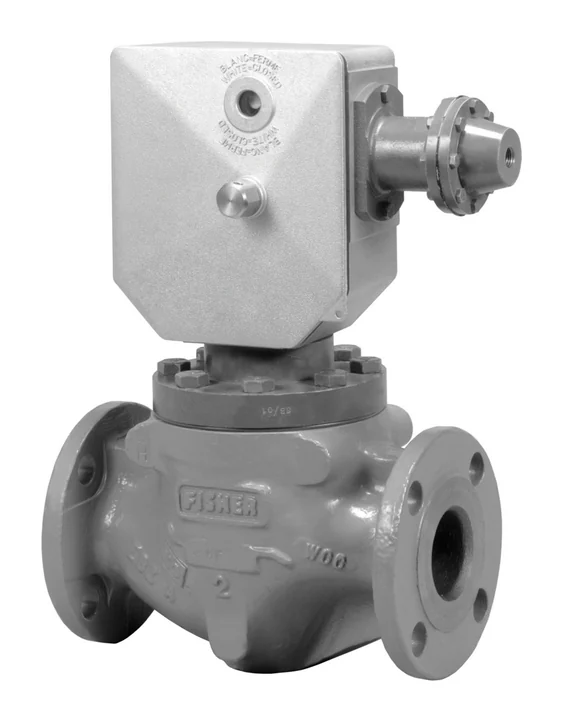
Fisher Type 92B pressure reducing valve
Main pressure reducing valve in process heating: heat exchangers, evaporators, digesters and reactors.
View bulletin
Regulators · Fisher
The reducing valve at every steam point of use: it takes its energy from the steam itself, follows equipment demand and holds heating pressure steady.
A steam regulator lowers pressure from the distribution lines to the level required at each point of use, automatically and without external power, balancing the force of a spring against steam pressure.
On steam, pressure fixes the condensing temperature, so stability weighs more and most main reducing valves are pilot-operated. The Fisher 92B is the industry standard; the 92S serves high-cycle duty, the 92C is the cost-effective option and the MR95 covers superheated steam.
Models
Manufacturer reference models for this type. Tell us the exact model or attach the nameplate: scope and availability are confirmed with each quotation.
Fisher
92B
Main pressure reducing valve in process heating: heat exchangers, evaporators, digesters and reactors.
View bulletin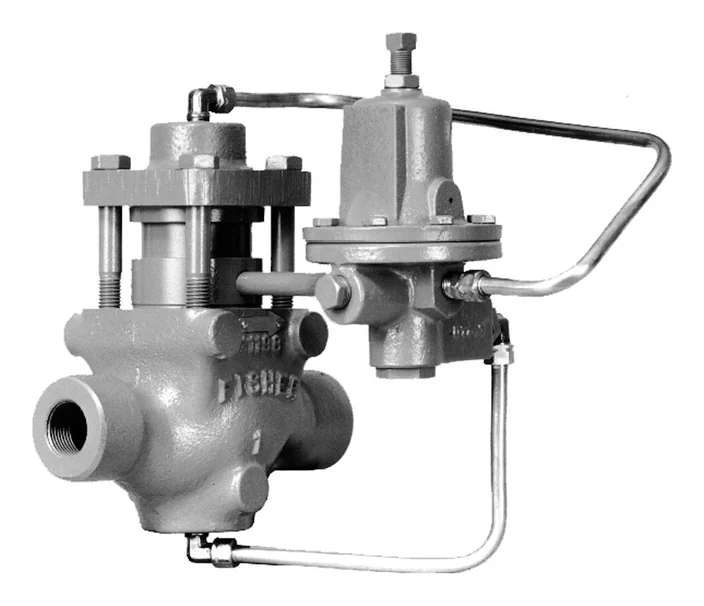
Fisher
92S
Piston actuated for high-cycle steam service, with lapped seating surfaces.
View bulletin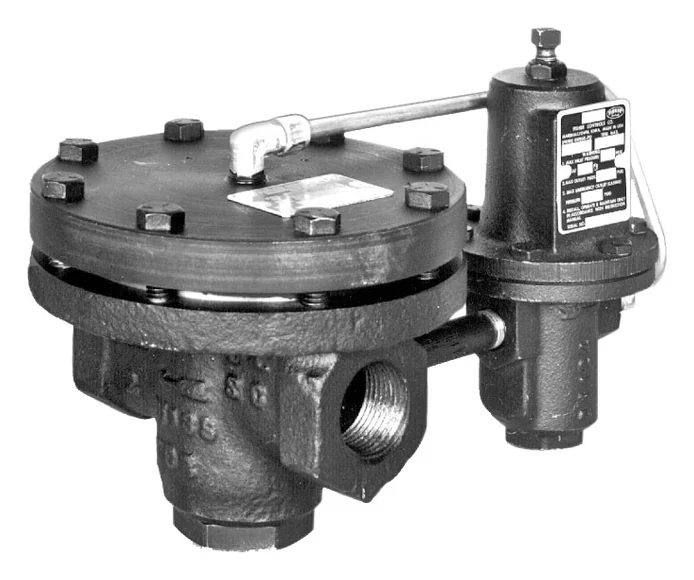
Fisher
92C
Cost-effective steam reducing regulator, with a Type 6392 pilot or pressure-loaded for remote adjustment.
View bulletin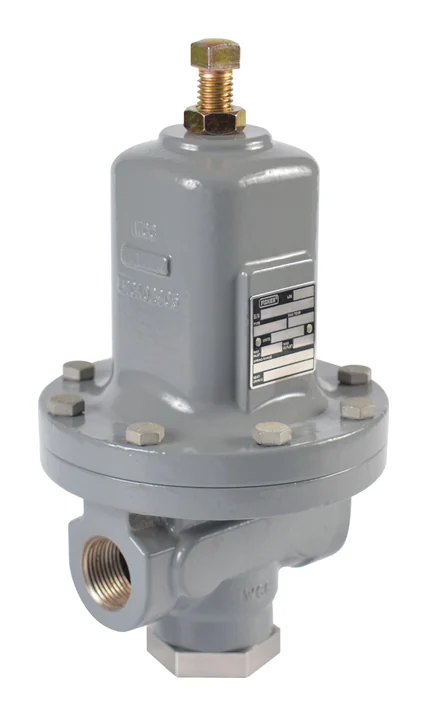
Fisher
MR95
Direct-operated for superheated steam, steam injection and tracing.
View bulletinBrand reference models per the manufacturer’s catalog. ITS quotes new valves and genuine parts to order; it does not publish stock or prices.
How it works
In the pilot-operated versions, a pilot senses outlet pressure and uses the inlet steam itself as the operating medium to position the main valve: no separate air supply is needed. As demand increases, outlet pressure falls, the pilot opens and loads the main valve actuator, which opens until set point is recovered.
Proper sizing considers inlet and outlet pressure, flow rate, temperature and steam quality, that is, the proportion of vapor to liquid. Emerson also recommends a bypass line for maintenance, isolation valves and steam traps that remove condensate and extend system life.
Pilot-operated main reducing valve, with three pilots to choose from and no atmospheric bleed, easily modified for special service.
Piston actuated for high-cycle service. Valve and pilot with lapped seating surfaces to minimize leakage; 6492H and 6492L pilots with bellows-sealed stems. In steel and stainless steel.
With a Type 6392 pilot, which uses inlet pressure as the operating medium, or without a pilot as a pressure-loaded regulator when remote adjustment is required. In-line maintenance.
Direct-operated and compact, for superheated steam, injection and tracing, where simplicity matters more than accuracy.
Applications
ITS de Venezuela
ITS quotes new Fisher steam regulators, their pilots and their genuine parts (diaphragms, pistons, seats, plugs, springs and gaskets), and services installed reducing stations: disassembly, cleaning, seat lapping, parts replacement, bench testing and set point adjustment in the Puerto Ordaz workshop, plus field service, with the support of the Venezuela ↔ Orlando inventory. To get a quotation, send this data: inlet steam pressure and temperature, desired outlet pressure, maximum and minimum flow, whether steam is saturated or superheated, line size and connections; or the model and serial number from the nameplate.
Quote parts or repairMaintenance of pressure regulators and relief devices.
Valve condition assessment before deciding to repair or replace.
On-site support, shutdowns, commissioning and start-up.
Resources
The full category, the technical library and the manufacturer’s official documentation.
Category
Pressure-reducing, backpressure, fuel gas and slam-shut.
Technical library
Our own documents and official Fisher links for each family.
Manufacturer
Product pages, bulletins and manuals on emerson.com.
Inlet and outlet pressure, maximum and minimum flow, temperature and steam quality, that is, whether it is saturated, wet or superheated. With that data the valve and pilot type and size are chosen. An oversized regulator works almost closed, wears the seat and regulates poorly at low load.
The most frequent causes are dirt or scale in the pilot, a main seat eroded by wet steam, a damaged diaphragm or piston, and condensate reaching the valve because a trap is out of service. Repair includes cleaning or replacing the pilot, lapping or replacing the seats and checking the station drainage.
Regulators
They hold downstream pressure constant with a diaphragm and a spring: the simple, fast solution for steam, water, air, gases and chemicals.
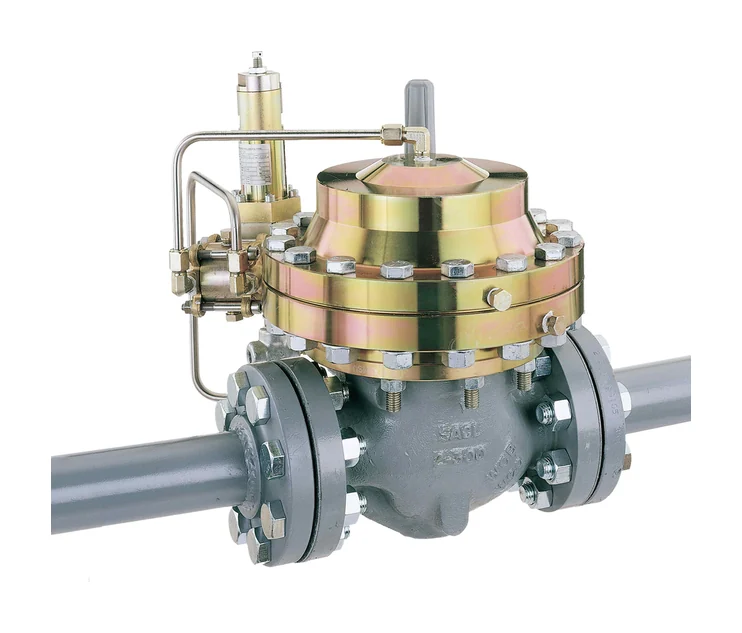
A pilot amplifies every slight change in outlet pressure and drives the main valve: more capacity and pressure closer to set point than direct operation.
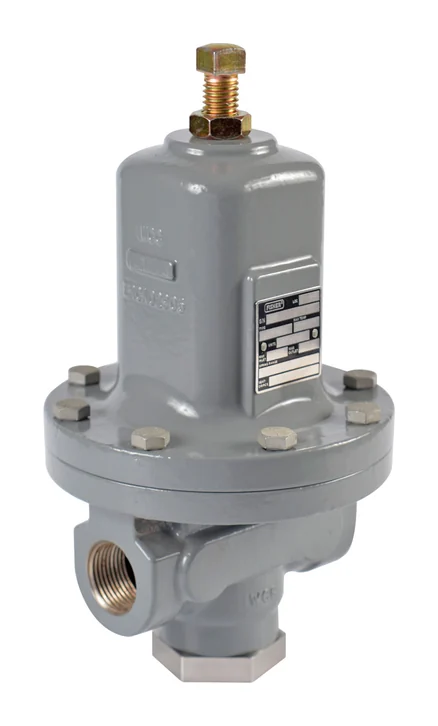
They control upstream pressure: they stay closed up to set point and pass only the excess to the return line, another pressure level or the vent.
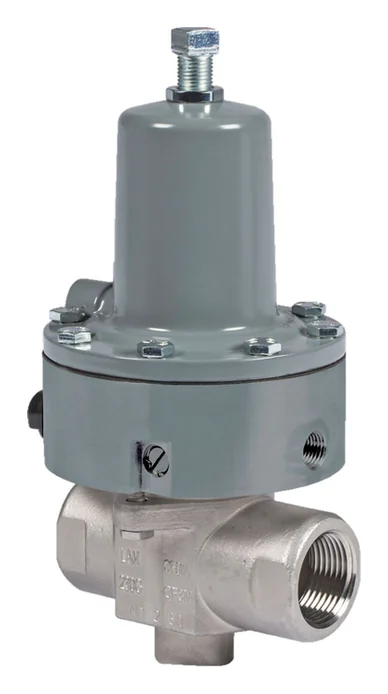
They open and close gas to the main burner with a tunable opening speed, so that ignition is correct on field heaters and treaters.
They shut off the gas supply quickly and completely when pressure leaves the set limits, and stay closed until manually reset.
Send the model, the part number or the process data. We reply with availability, lead time and delivery terms.